
Prisoners' death penalty law
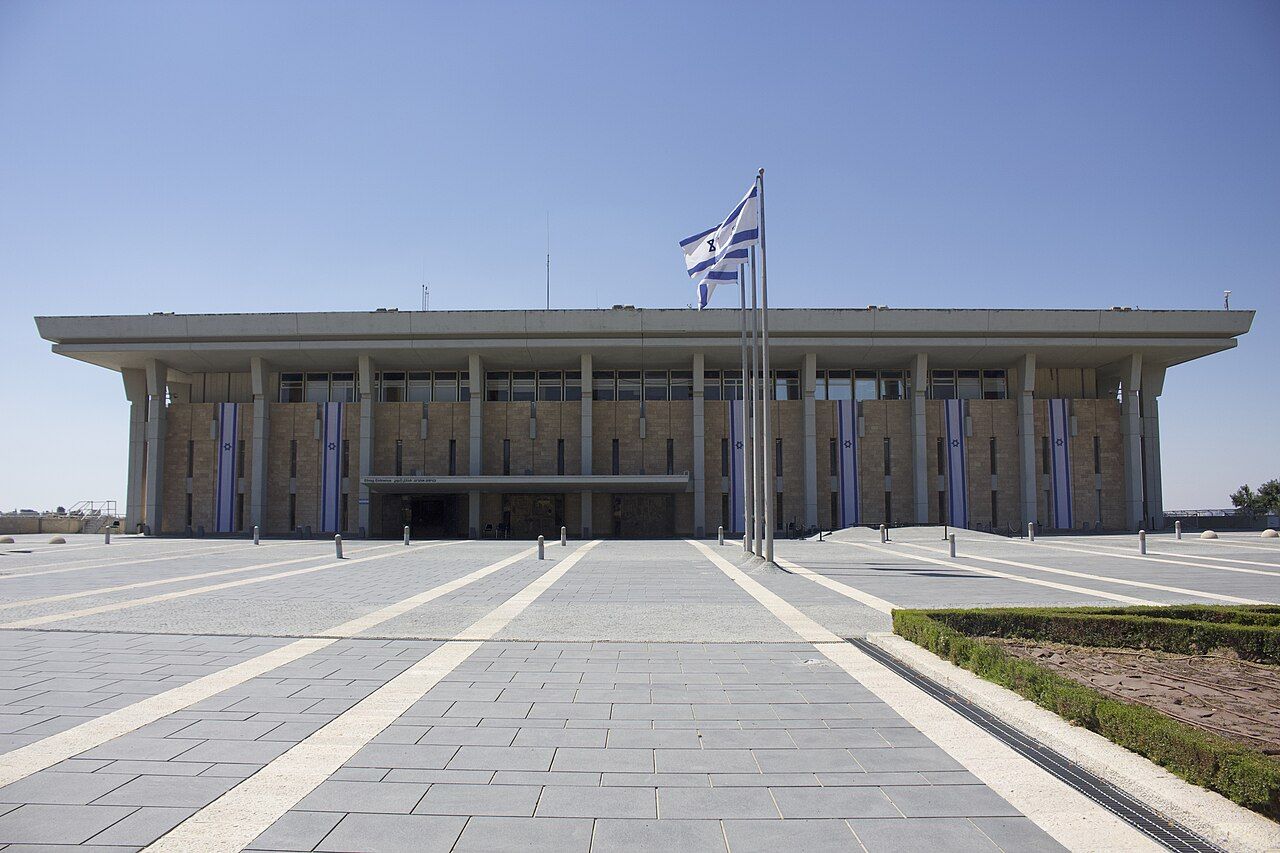
On 30 March 2026 the Knesset passed a law opening the way to executing Palestinian prisoners. UN experts warned that it creates a discriminatory death penalty regime targeting Palestinians and violates the right to life.

Translated from the Arabic original. Read the Arabic original
What happened
On 24 March 2026 the Knesset's National Security Committee advanced the bill to its second and third readings, after it had passed its first reading in November 2025. The law was passed on 30 March 2026. According to international coverage, it makes death the default sentence in a number of cases involving Palestinians tried in military courts, with tight restrictions on clemency and pardon.
The foreign ministers of Germany, France, Italy and the United Kingdom expressed deep concern about the law, and UN experts warned of its discriminatory nature.
Why it is a double danger
The law comes amid a documented rise in torture, starvation, medical neglect and deaths in custody, and before a system of military courts that lacks fair trial guarantees. The death penalty is irreversible, so any judicial error cannot be corrected.
Legal framework
- International Covenant on Civil and Political Rights, Article 6: the right to life, and the prohibition of discrimination in the application of penalties.
- Fourth Geneva Convention, Article 68: strict limits on the death penalty in occupied territory.
- Article 14 of the Covenant: fair trial guarantees, an essential condition in any case that could end in a death sentence.
Questions and answers
May an occupying power impose the death penalty?
The Fourth Geneva Convention (Article 68) severely restricts it. A protected person may be sentenced to death only for specific offences, and only if those offences were punishable by death under the law of the occupied territory in force before the occupation began. A death sentence may never be pronounced on a person who was under 18 at the time of the offence.
Has the Supreme Court frozen the law?
No. Adalah petitioned the Supreme Court, but the circulating claim that the court froze the law is false, according to the fact-checking platform Misbar. We follow any judicial development in the daily monitor.
Our latest on this issue
-
Daily monitor
Daily monitor – Thursday 12 November 2026
Online platform for families of Gaza detainees: the Commission of Detainees' Affairs launched a link that lets families register their detained relatives, so its legal team can find out where they are held and arrange visits.
-
Daily monitor
Daily monitor – Tuesday 27 October 2026
8 prisoners isolated over a cake: eight Palestinian prisoners were sent to solitary confinement after making a cake from leftover food, and minister Ben-Gvir publicised the incident in his election campaign two days before the vote. A prisoner lost ten kilograms: the Palestinian Information Center reported that a priso
-
Daily monitor
Daily monitor – Sunday 25 October 2026
About 70 arrests in the West Bank from Friday 23/10 to dawn on Saturday 24/10, most of them released prisoners, and field interrogations affecting hundreds, alongside a large military operation in Hebron. Hebron: families evicted from al-Jalda and Ein Deir Bahha after two Israeli soldiers were killed at a checkpoint; estimates range from 150 to 250 families.
-
Daily monitor
Daily monitor – Monday 19 October 2026
22 cases of rubber bullets fired at detainees, documented by Physicians for Human Rights – Israel and the Public Committee Against Torture, most of them since last autumn and some without subsequent treatment. The Israel Prison Service's legal adviser replied that there is no reason to stop "proportionate" use. Lawyers' visits cancelled.
-
Daily monitor
Daily monitor – Saturday 17 October 2026
22 prisoners have been shot inside prisons, according to joint documentation by Physicians for Human Rights and the Public Committee Against Torture; the Israel Prison Service says its use of "non-lethal" means is proportionate. Doctor Marwan al-Hams (Gaza) was shackled and beaten in the presence of Ben-Gvir in Ganot prison, according to the Prisoners' Media Office.